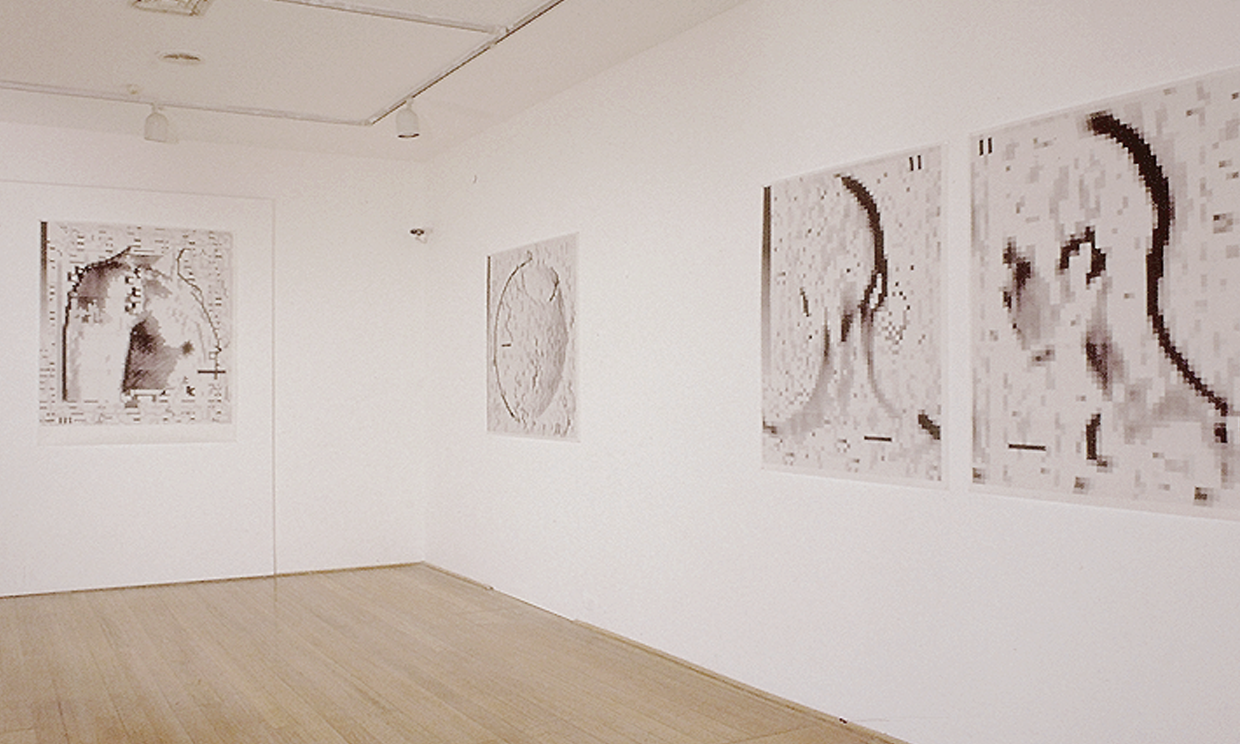
Anatomies, Galley view, Australian Centre for Contemporary Art, Melbourne.
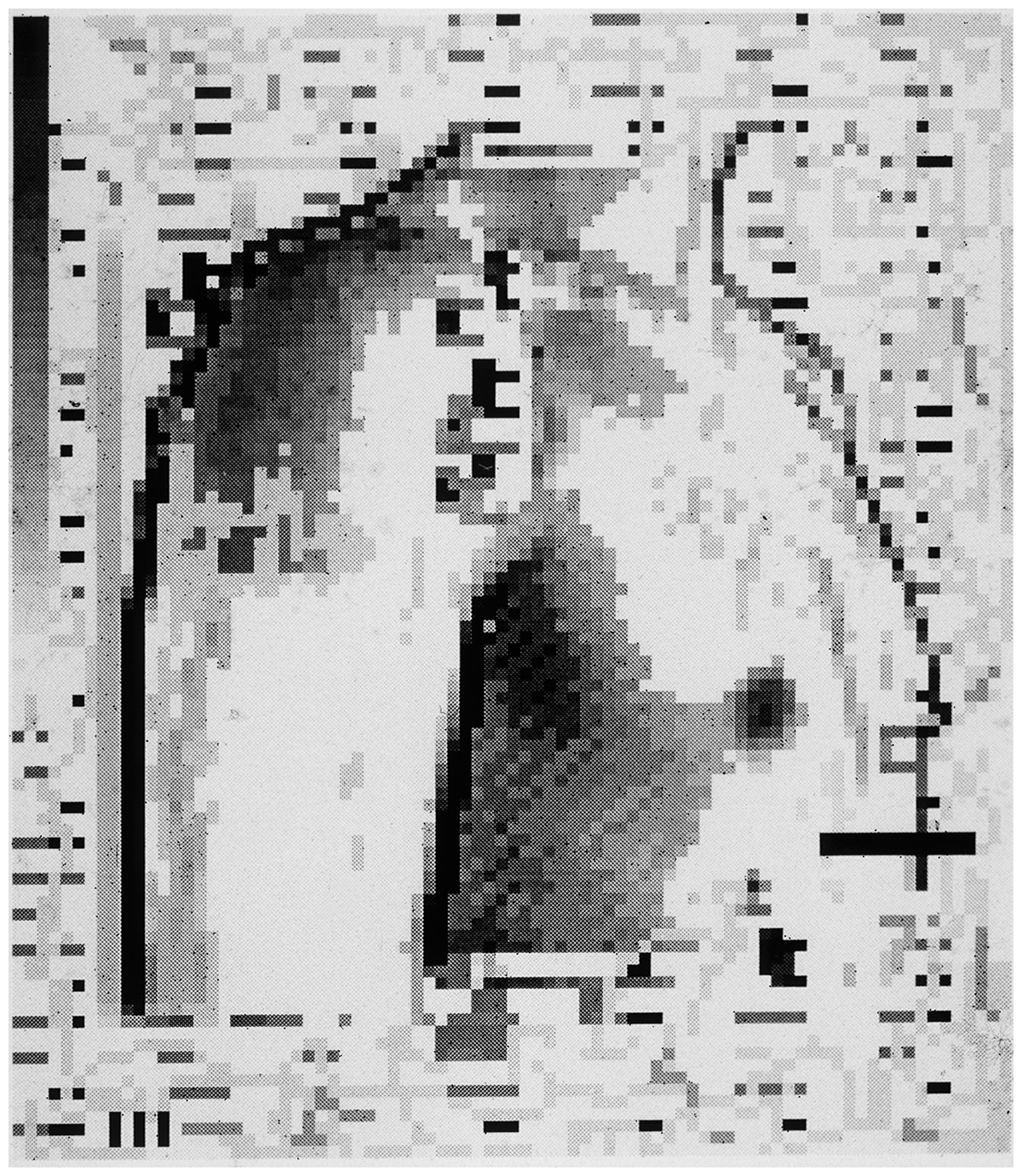
Torso, Laser prints on polyester film., 180 x 130cm
The torso is almost classical, but the surface has 'gaps' (negative space) which suggests an intrusion different from dissection.
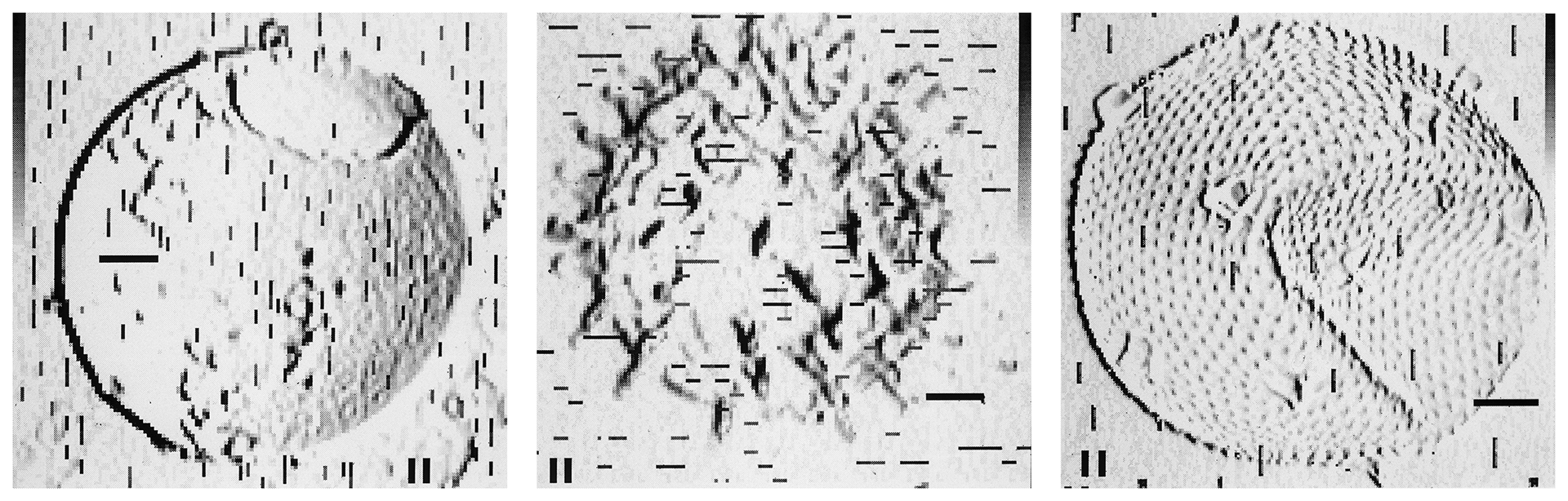
Virus 1, 2 and 3, each 135x135cm.
Leibnitz countered Descartes' mechanistic idea of the body by proposing that units of energy called monads 'animated' living things. These virus images refer to both the human and computer virus and to a type of energy (a monad?) that might be in the body. Derived from electron scanning microscope images, the source and scale of the original objects is ambiguous.
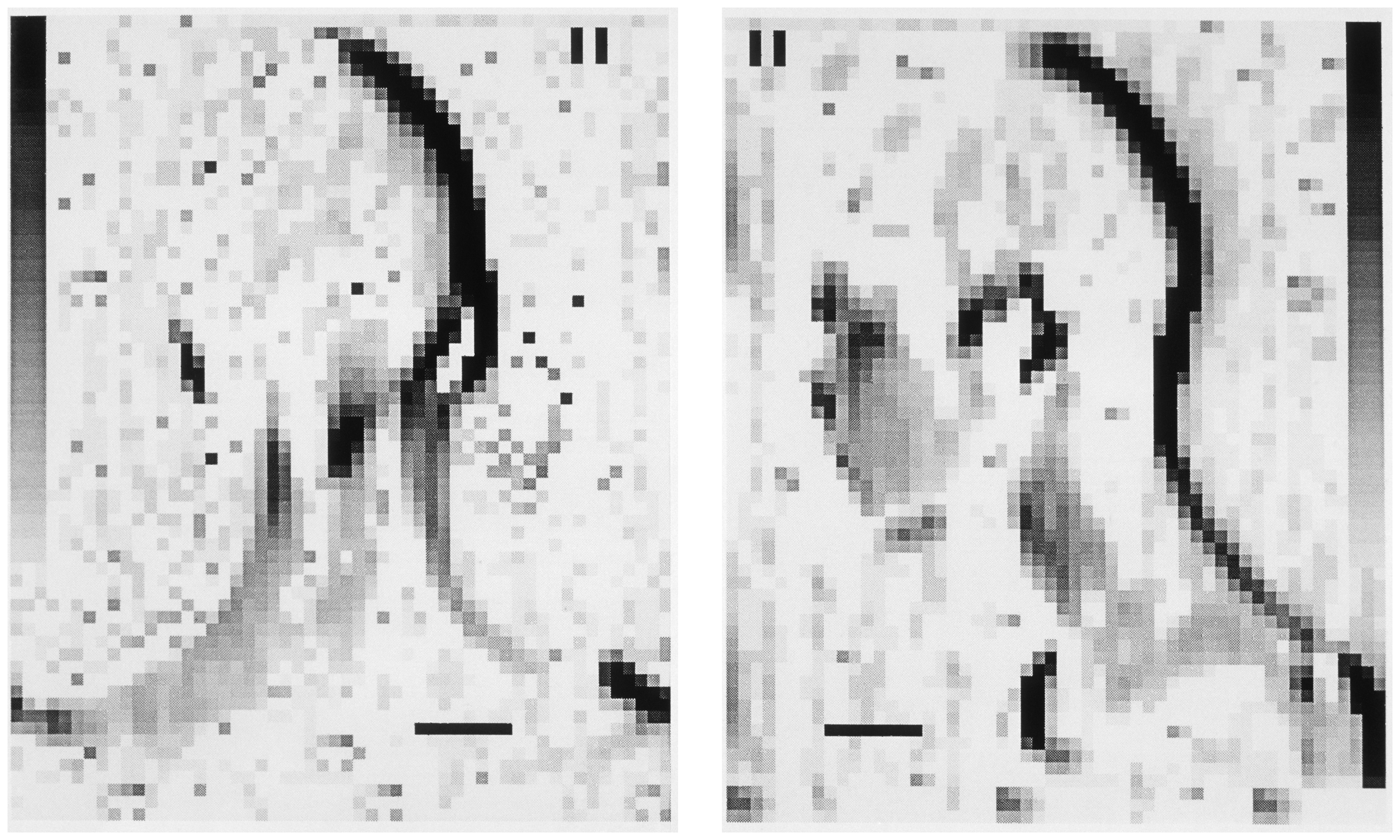
Female head, Laser prints on polyester film., each 180 x 130cm.
Despite the rationalism of the technology some 'residue' of humanity exists in the elegance of the neck
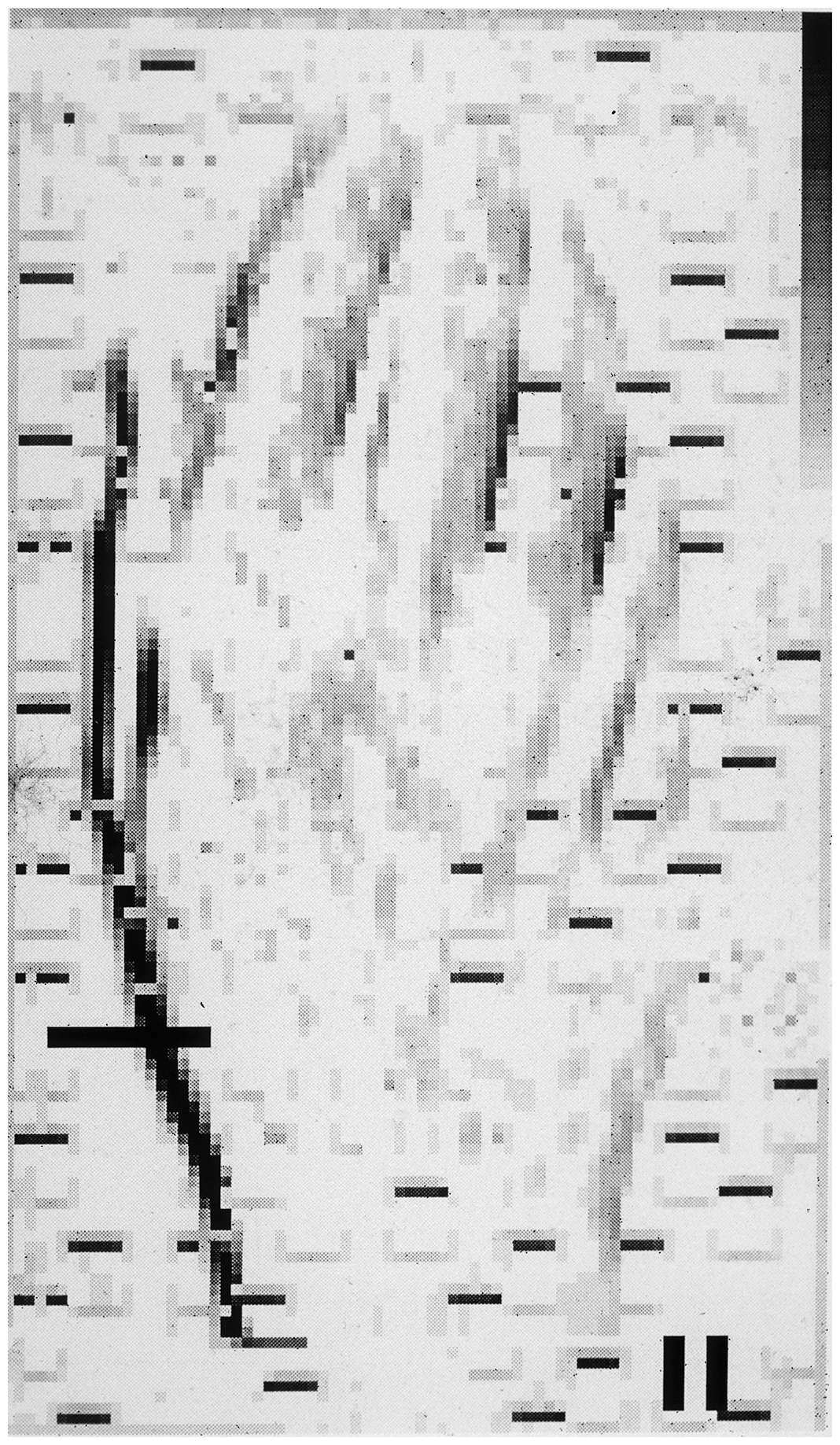
Hand, 110 x 180cm.
The "expression" of the hand is suggestive of personality.
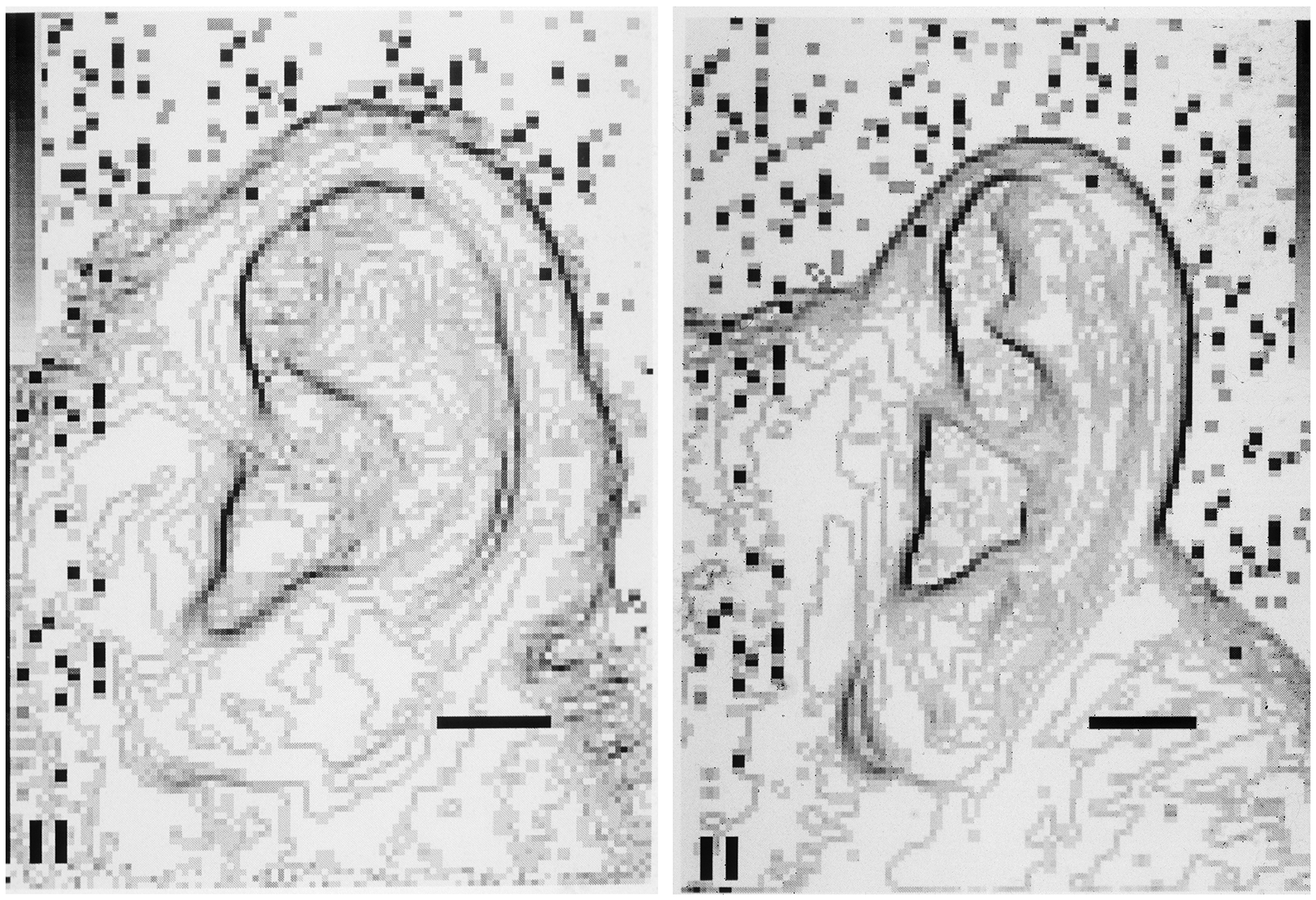
Ears, each 130 x 180cm.
These images reference the cartographic attitude of science and imaging technology.